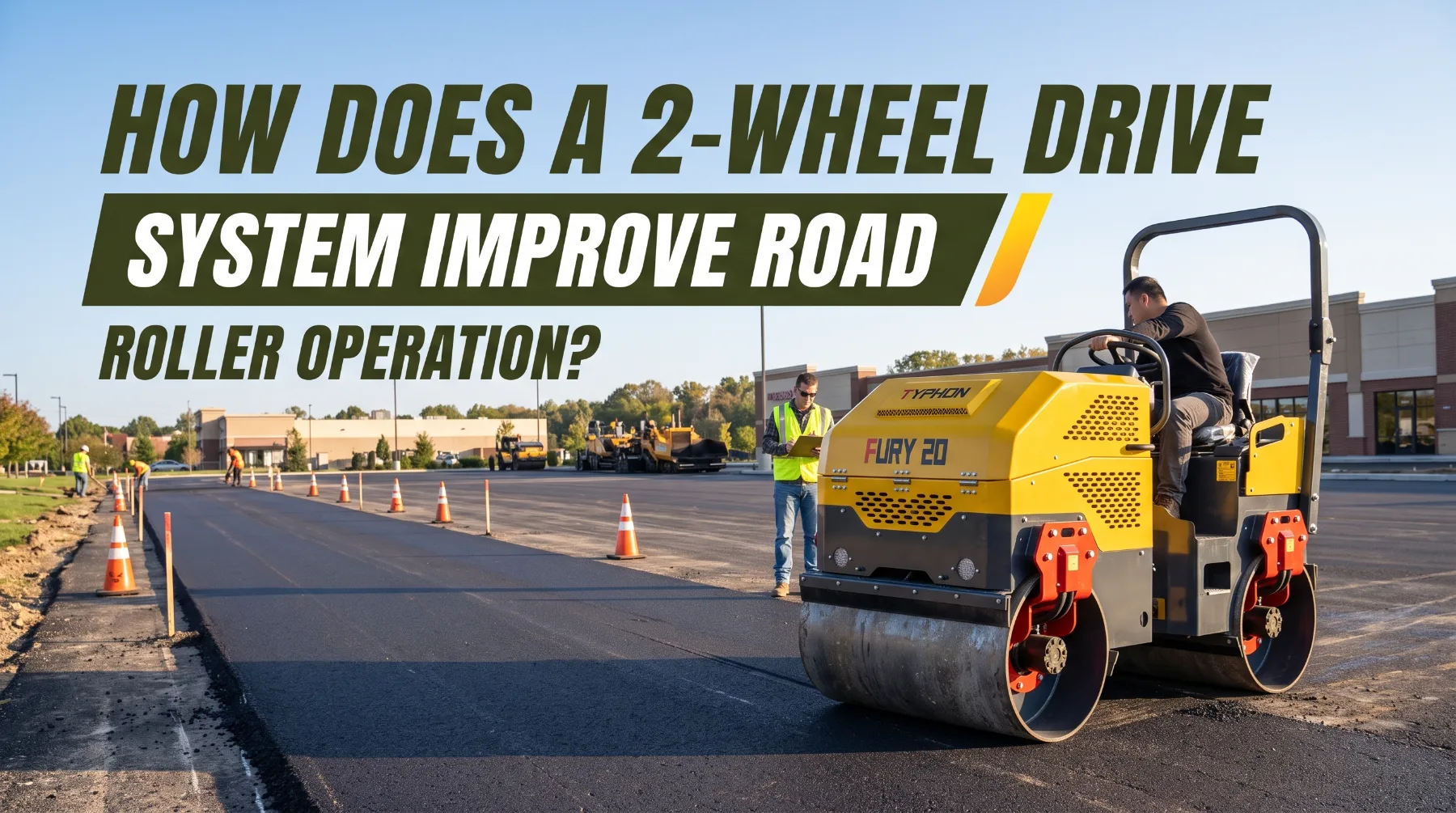
A crew paving a downtown parking lot needs a roller that can weave between light poles, drainage grates, and parked delivery trucks without missing a beat. The surface is level, the mat is warm, and the passes are short and precise. In that setting, a machine built for extreme climbing or slick, unstable ground would be overkill, adding cost and complexity the job never uses. What the crew actually needs is a roller that turns tightly, tracks straight, and compacts cleanly on firm, level ground. That practical fit is exactly where a 2-wheel drive system earns its place.
The drive system decides how a road roller puts power to the ground, and that choice shapes how the machine handles nearly every pass. A 2-wheel drive setup is the workhorse configuration behind a huge share of compaction work, especially on the flat, prepared surfaces that make up most paving and site jobs. This post explains how the system works, how it strengthens traction and maneuverability, where it performs at its best, how it stacks up against all-wheel drive, and how to match it to the demands of your own sites.
The real advantage comes from matching the drive system to the surface rather than paying for capability the job rarely demands. On asphalt, finished base, parking areas, and other stable surfaces, 2-wheel drive can provide the traction needed to maintain steady passes while keeping the machine easy to maneuver. Knowing where this setup performs best makes it easier to decide when its balance of traction, control, and simplicity is the right fit for your work.
How a 2-Wheel Drive System Works on a Road Roller
A double-drum roller using 2-wheel drive powers one drum while the other rolls freely along with the machine. The driven drum receives power from the engine through a hydrostatic transmission, converting engine output into smooth, controlled rolling motion. The undriven drum still carries its share of the machine's weight and contributes to compaction, but it follows rather than pulls. On single-drum soil compactors, the same principle applies with the drum driving alongside powered rear wheels or the reverse arrangement.
This layout keeps the drivetrain simpler and lighter than a fully driven design. Fewer powered components mean fewer parts to service, lower purchase cost, and a machine that's easy to operate and maintain over a long life. The hydrostatic drive gives the operator fine control over speed and direction, which matters when compaction quality depends on consistent, even passes. For the firm, level ground where most rolling happens, driving one drum delivers all the pulling power the job requires.
Drive placement also affects how the roller responds during acceleration, turning, and changes in surface conditions. Because only one drum receives direct power, the machine relies on its weight and the driven drum's contact to maintain forward movement. On stable asphalt and prepared base, this arrangement provides predictable travel and controlled passes without the added drivetrain complexity of powering both drums. The result is a practical balance of traction, maneuverability, maintenance, and operating efficiency for routine compaction work.
Key takeaway: A 2-wheel drive road roller powers one drum through a hydrostatic transmission while the other follows, delivering a simpler, lighter, easier-to-maintain machine that suits the majority of compaction work.
How It Strengthens Traction and Maneuverability
Traction on a roller isn't about clawing up steep hills; it's about laying down power smoothly so the drum grips the surface and moves the machine forward without slipping. On level, prepared ground, a single driven drum has plenty of grip to pull the roller's full weight through pass after pass. The machine's mass presses the driven drum firmly into the surface, and the hydrostatic drive feeds power gradually, so the operator gets predictable movement and clean starts even on a warm, tacky asphalt mat.
Maneuverability is where this setup genuinely shines. With a lighter, less complex drivetrain, the roller responds quickly to steering input and holds a tight turning line. That agility pays off on confined sites, where the operator constantly repositions to reach edges, corners, and the awkward pockets around obstacles. Precise control also protects compaction quality, since smooth acceleration and steady tracking prevent the surface marks and uneven density that jerky movement can leave behind. A nimble roller finishes edges and joints cleanly, which is often where paving jobs are judged.
Key takeaway: On level ground, a single driven drum supplies ample traction for clean, slip-free passes, while the lighter drivetrain delivers the tight, responsive maneuverability that confined and detail-heavy sites demand.
Where a 2-Wheel Drive Roller Performs Best
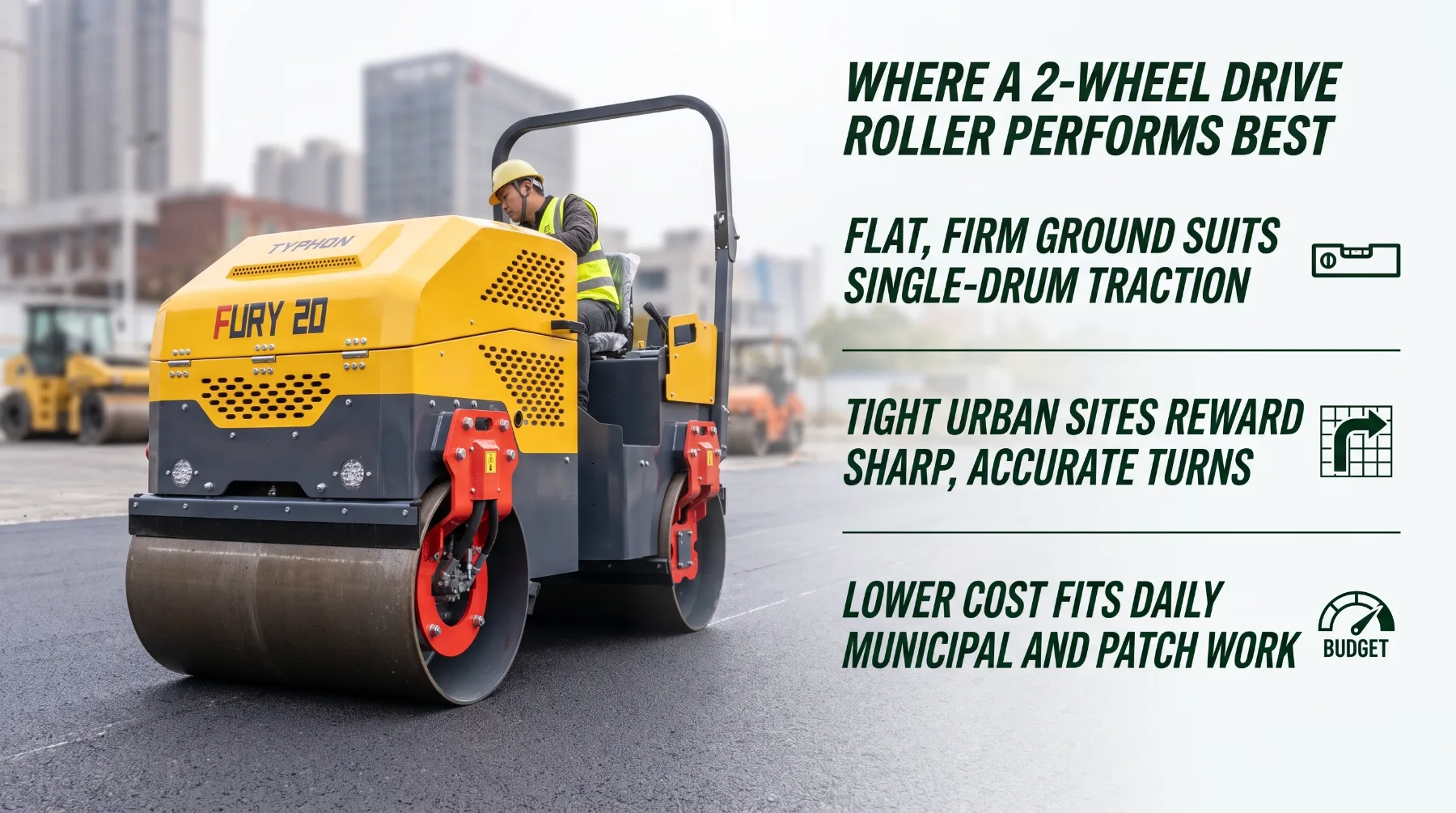
The natural home for a 2-wheel drive roller is flat, firm, prepared ground, and that describes the bulk of compaction work. Asphalt paving on roads, driveways, parking lots, and laydown yards plays directly to the system's strengths, since the surface is level and the machine simply needs steady traction and precise control to build density evenly. Here the roller runs efficient, repeatable passes without ever asking more of the drivetrain than a single driven drum can give.
Urban and commercial projects suit the configuration especially well. Tight streets, building surrounds, sidewalks, and small lots reward a machine that turns sharply and positions accurately, and the lower cost keeps it economical for contractors who work these sites daily. Municipal maintenance, patch work, and general site compaction on stable sub-base all fall comfortably within its range. As long as the ground is level and firm and the slopes stay gentle, a 2-wheel drive roller delivers dependable results without the extra weight and expense of a fully driven machine.
Key takeaway: A 2-wheel drive roller performs best on flat, prepared surfaces such as asphalt paving, parking lots, and urban and commercial sites, where steady traction, tight maneuverability, and lower cost matter most.
How It Compares to All-Wheel Drive in Different Conditions
All-wheel drive powers both drums, which changes what the machine can handle when the ground works against it. On steep grades, loose or unstable sub-base, or fresh, slippery mats, driving both drums keeps the roller pulling when a single driven drum might start to slip. For hilly terrain, thick lifts, and demanding soil compaction on soft ground, that added traction is a real advantage, and it's why heavy-duty and specialized rollers often carry it.
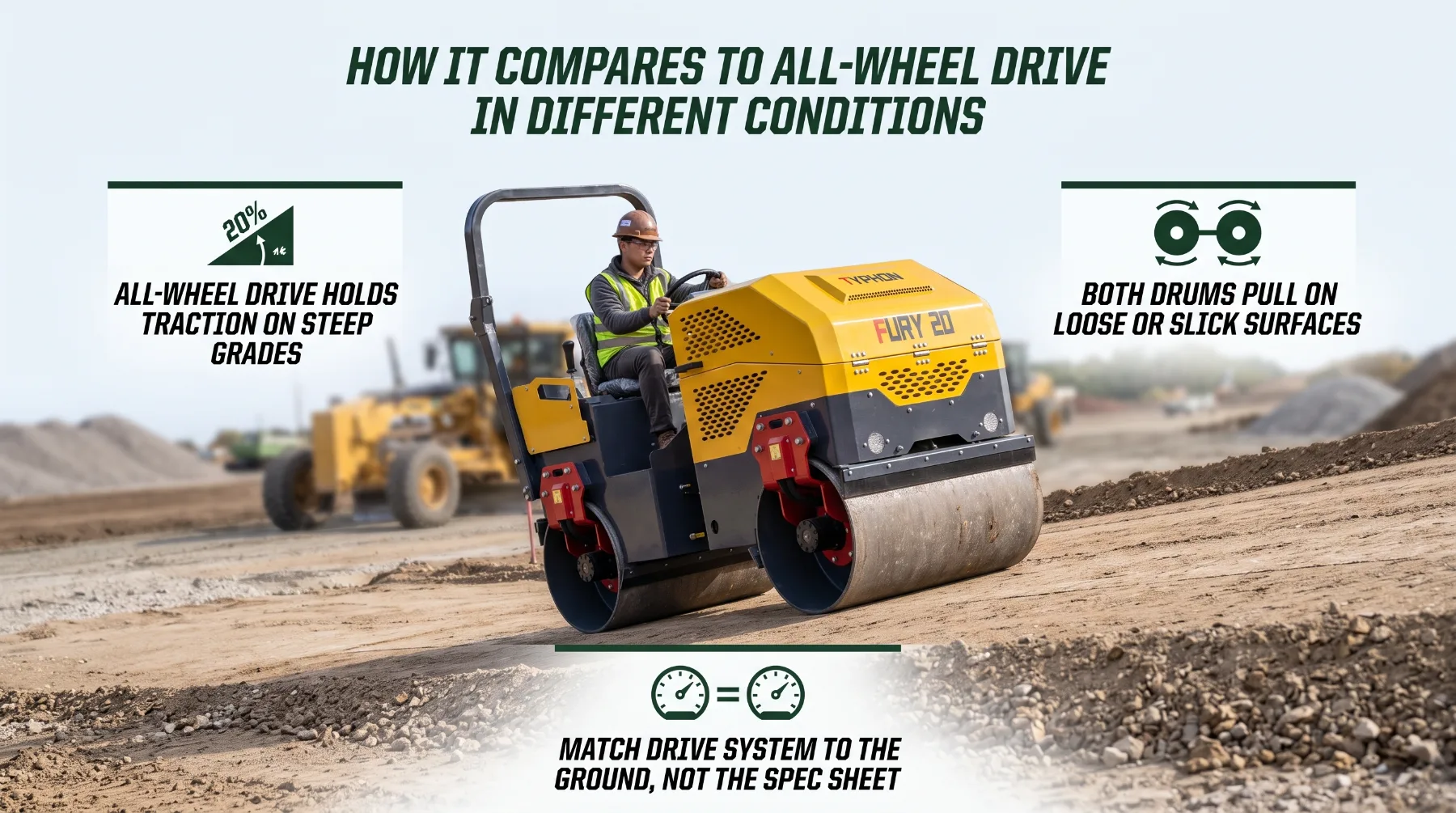
The trade-off is cost, weight, and complexity. An all-wheel drive machine costs more to buy and maintain, carries a heavier drivetrain, and delivers capability that flat, prepared jobs simply never call on. Paying for both-drum traction to compact a level parking lot is spending on a margin you'll rarely touch. The honest comparison comes down to terrain: choose all-wheel drive when grades, soft ground, or slick conditions define your work, and choose 2-wheel drive when your sites are mostly flat and firm. Matching the drive system to the ground, rather than to the biggest spec, is what keeps a roller both capable and cost-effective.
Key takeaway: All-wheel drive wins on grades, soft ground, and slick mats through both-drum traction, while 2-wheel drive wins on flat, firm sites through lower cost and weight, so terrain should decide the choice.
Conclusion
A 2-wheel drive system improves road roller operation by delivering exactly what the majority of compaction work demands: dependable traction on level ground, sharp maneuverability in tight spaces, and a simpler, lighter, more affordable machine to buy and maintain. Powering one drum through a hydrostatic transmission gives the operator precise control for clean, even passes, and it does so without the weight, cost, and complexity of driving both drums. On asphalt paving, parking lots, urban streets, and prepared site work, that focused capability is a genuine strength rather than a limitation.
Frequently Asked Questions
Can a 2-wheel drive road roller handle any slopes at all?
Yes, a 2-wheel drive roller handles gentle slopes and gradual inclines that fall within its rated gradeability, which covers a great deal of everyday paving and site work. The limitation shows up on steeper grades and on loose or slippery surfaces, where a single driven drum can begin to lose traction and slip. If your projects stay on level ground and mild slopes, a 2-wheel drive machine performs reliably. If steep climbs or unstable sub-base appear often in your schedule, check the roller's gradeability rating against your worst regular slope, and consider all-wheel drive if the demand is consistent.
Does a 2-wheel drive roller compact as well as an all-wheel drive machine on flat ground?
On flat, firm ground, yes. Compaction quality depends chiefly on the machine's weight, drum design, and any vibration system, along with steady, even passes, rather than on how many drums are driven. Both drums press into the surface and contribute to density regardless of which one delivers power. The traction advantage of all-wheel drive matters on grades, soft ground, and slick mats, not on level, prepared surfaces. For flat asphalt and site work, a properly sized 2-wheel drive roller builds density just as effectively while costing less to own and run.
Is a 2-wheel drive roller cheaper to maintain over time?
Generally yes, because a simpler drivetrain with fewer powered components means fewer parts to service and repair. Driving one drum rather than two reduces both the initial purchase price and the ongoing maintenance load, and the lighter machine is typically easier for operators to run and service. For contractors whose work centers on flat, prepared surfaces, those savings add up without sacrificing performance on the jobs they do most. If your sites rarely demand both-drum traction, the lower lifetime cost is one of the strongest arguments for choosing 2-wheel drive.
COMMENTS (0)
LEAVE A REPLY