
Load capacity specifications need to be read as operating limits, not simply numbers to compare. Wheel loader spec sheets may list both maximum load capacity and rated load capacity, but these figures represent different points in the machine’s lifting range. Maximum capacity indicates the upper physical capability under defined conditions, while rated capacity reflects the load the machine is designed to handle within its required stability and operating limits. Treating the higher figure as the everyday working capacity can increase the risk of instability, excessive component stress, and premature wear. The difference between these ratings comes from how the manufacturer defines safe working performance. Rated capacity is intentionally set below the machine’s absolute maximum to provide an operating margin under real jobsite conditions. Understanding how each figure is measured, why the rated value is lower, and what can happen when it is exceeded helps operators select loads more accurately. Reading both specifications correctly also makes it easier to balance lifting performance, machine stability, productivity, and long-term durability.
What Maximum Load Capacity Actually Measures
Maximum load capacity describes the absolute limit of what a wheel loader can lift before physics takes over. It represents the point at which the machine either reaches its structural threshold or begins to tip forward as the load overcomes the counterweight at the rear. Think of it as the outer boundary, the last inch of ground the machine can hold before it loses stability. This figure is closely tied to the static tipping load, the weight at which the loader's rear wheels start to lift off the ground with the bucket at full reach. Engineers measure it under controlled conditions: level ground, a specific bucket position, and no movement. It is a theoretical ceiling, not a working target. Because it marks the failure point rather than a safe operating zone, maximum load capacity should never guide your daily lifting decisions. It tells you where danger begins, which is useful knowledge, but it is not a number you plan work around. Treating it as a goal is how accidents happen.
What Rated Load Capacity Actually Measures
Rated load capacity is the weight a wheel loader can safely handle in normal operation, with a deliberate safety margin built in. This is the number that should govern how you load the bucket, plan your cycles, and choose the right machine for a job. It reflects real work, not a laboratory limit. Manufacturers derive rated capacity as a fraction of the tipping load, following recognized industry standards. For wheel loaders, that fraction is typically 50 percent of the full-turn static tipping load, the point at which the machine is least stable because articulation shifts the balance point. That built-in cushion accounts for the dynamic realities of a jobsite: movement, uneven ground, and the shifting mass of material in motion. Where maximum capacity describes what the machine can do once under perfect conditions, rated capacity describes what it can do repeatedly under real ones. It is the honest working limit, and it is the figure that keeps operators safe and productive shift after shift.
Why the Two Figures Differ by Design
The gap between maximum and rated capacity is not a marketing quirk or a conservative afterthought. It is engineered on purpose to absorb the difference between a static test and a working jobsite. A number that holds true on level, motionless ground means little once the machine starts moving, turning, and lifting under load.
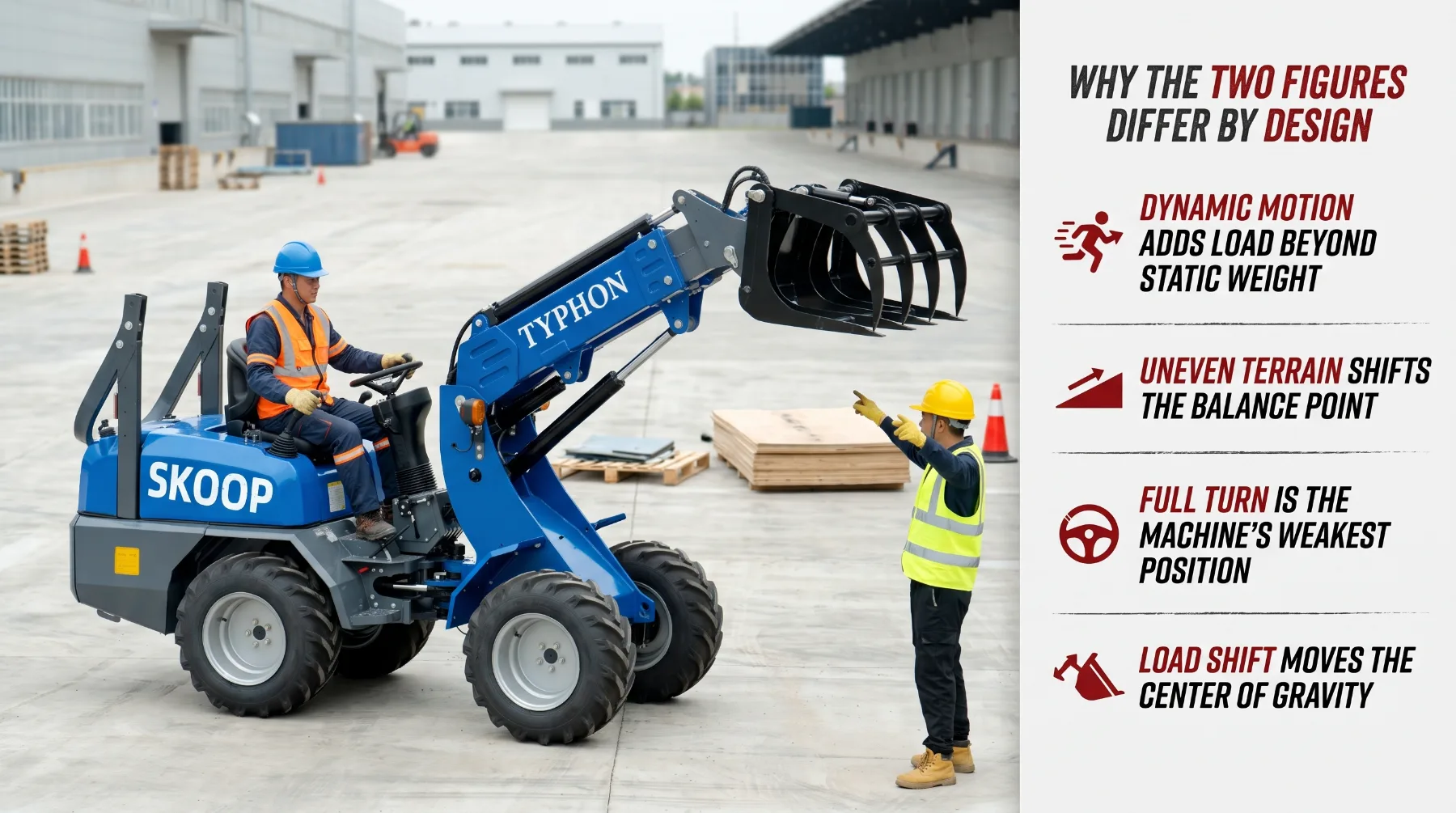 Several real-world forces justify that margin:
- Dynamic motion: Accelerating, braking, and lifting all add momentary loads far beyond the material's static weight.
- Uneven terrain: Slopes, ruts, and soft ground shift the balance point and reduce stability without warning.
- Articulation: A wheel loader is least stable at full turn, so the rated figure accounts for the machine's weakest position, not its strongest.
- Load shift: Material can slide or settle in the bucket, moving the center of gravity forward unexpectedly.
Consider a loader with a full-turn tipping load of 20,000 pounds. Its rated capacity lands near 10,000 pounds. That 10,000-pound cushion isn't wasted capability; it is the buffer that keeps the machine planted when the operator turns on a slope with a heaped bucket. Remove that margin, and every one of the forces above pushes you toward the tipping point.
What Happens When You Exceed Rated Capacity
Working beyond rated capacity doesn't trigger an immediate failure, and that is precisely what makes it dangerous. The machine keeps functioning, so operators assume the extra weight is fine. In reality, they've eaten into the safety margin that protects them, and the consequences arrive in stages.
Immediate safety risks
The first threat is stability. As the load climbs toward the tipping figure, the rear wheels grow light, steering loses precision, and braking distances stretch. A turn on uneven ground that would be routine at rated capacity becomes a genuine tip-over risk. On a wheel loader, a forward tip with a raised bucket happens fast and leaves little room to react.
Accelerated wear and hidden damage
Even lifts that stay upright take a toll when they exceed the rated limit. Overloading strains hydraulic cylinders, stresses the lift arms and pins, overworks the transmission, and flattens tires faster than normal. This damage accumulates invisibly. The machine that gets overloaded "just a little" every shift ages far quicker than one worked within its rated range, and the repair bills eventually reveal the shortcut.
Lost productivity
Overloading also backfires on output. An operator carrying too much slows down, takes wider turns, and moves cautiously to avoid instability, which stretches every cycle. A loader working within its rated capacity moves at a steady, confident pace and often shifts more material per hour than one straining under an oversized load.
How Understanding Both Specs Improves Operation
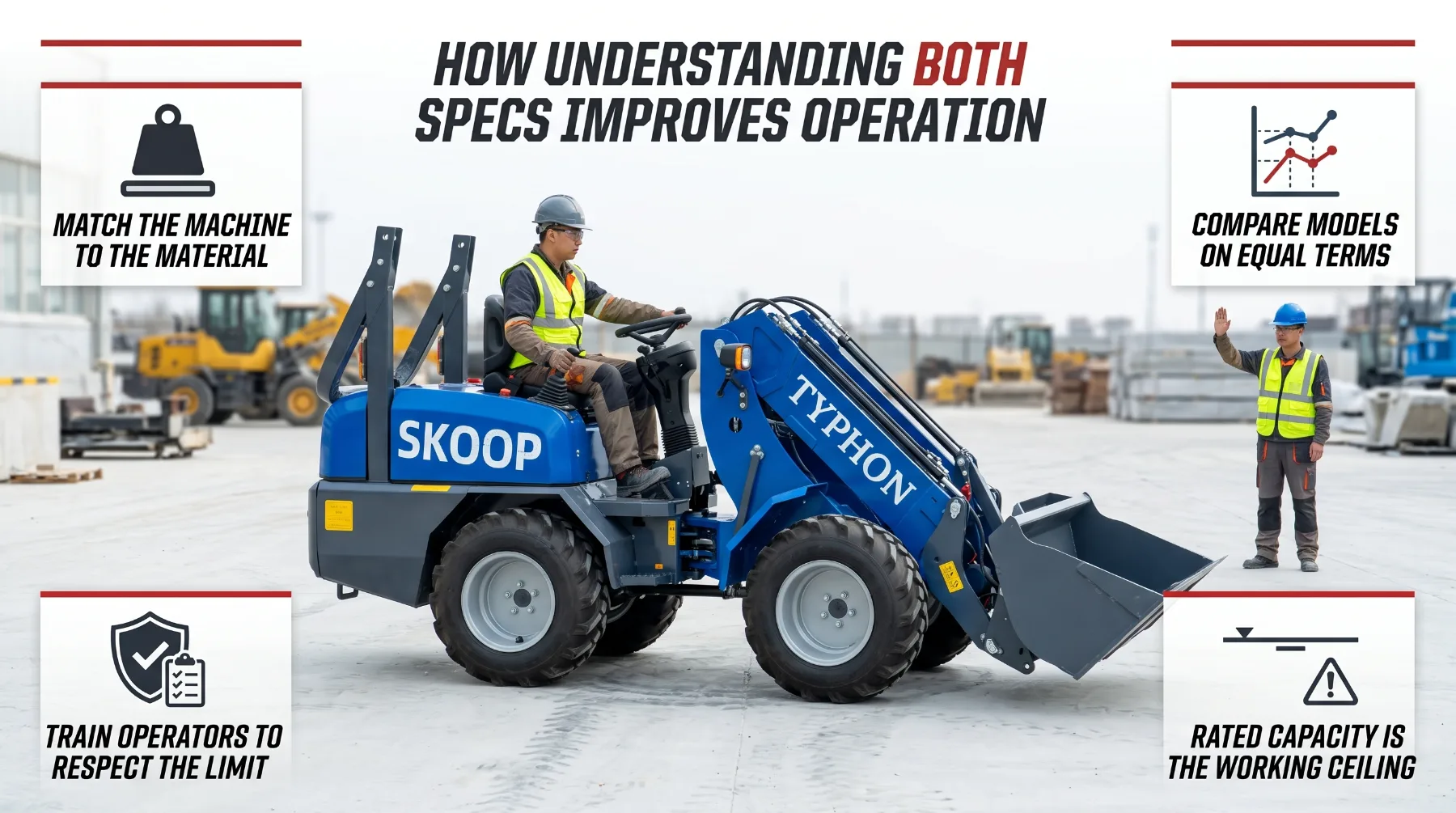 Reading these two figures correctly turns a spec sheet into a practical decision-making tool. Maximum capacity tells you where the cliff edge is. Rated capacity tells you where to safely stand. You need both, but you plan your work around the rated number every time. Match the machine to the material. Estimate the weight of a full bucket of your heaviest material, then confirm it sits comfortably within the loader's rated capacity, not just under its maximum. A machine that can technically lift your load once is not the same as one that can move it safely all day. Compare models on equal terms. When you weigh one wheel loader against another, confirm both rated figures are calculated to the same standard, typically 50 percent of full-turn tipping load. A higher rated number means little if it's measured differently, so standardize the basis before you trust the comparison. Train operators to respect the rated limit. The most productive crews treat rated capacity as the working ceiling and maximum capacity as a warning line they never approach. That discipline keeps the machine stable, protects its components, and sustains a steady output that easily outpaces anyone forcing oversized loads.
Long-Term Value of Working Within Rated Capacity
Respecting the rated limit pays off well beyond a single safe shift. A loader consistently worked within its rated capacity keeps its hydraulics, drivetrain, and structure operating inside their design limits. Components reach closer to their full service life, leaks and failures arrive later, and downtime stays rare. The financial picture follows the same logic. A machine spared chronic overloading burns fuel in proportion to the work it does, avoids the repair bills that strain brings, and holds its condition across seasons of hard use. When resale time comes, a loader that shows disciplined operation commands stronger interest than one carrying the marks of years of overwork. In short, the rated figure is a durability feature as much as a safety one. The operator who honors it gets a machine that stays safe, productive, and valuable far longer than one pushed toward its maximum.
Conclusion
Maximum load capacity and rated load capacity are not two versions of the same number. Maximum marks the physical edge where the machine tips or fails, while rated marks the safe, practical limit engineered with a margin for the realities of a working jobsite. Confuse them, and you trade that margin for accelerated wear, unstable lifts, and real tip-over risk. The path forward is simple. Plan every job around rated capacity, estimate the weight of your heaviest full bucket, and confirm it sits comfortably below that rated figure. Compare machines using the same rating standard, and train your crew to treat the maximum as a boundary they never test. A wheel loader worked within its rated limit stays safer, moves more material, and lasts longer, and that discipline shows up on your bottom line for years.
Frequently Asked Questions
Which capacity figure should I use to plan my daily work? Always use rated load capacity. It's the weight the machine can safely handle in normal operation, with a margin built in for movement, turning, and uneven ground. Maximum load capacity marks the tipping or structural limit and should be treated as a danger line, not a working target. Planning around the maximum removes the safety cushion that keeps the loader stable. How is rated load capacity calculated on a wheel loader? Rated capacity is typically set at 50 percent of the full-turn static tipping load, following recognized industry standards. Engineers measure the tipping load with the machine articulated to its least stable position, then apply that fraction to build in a safety margin. This accounts for the dynamic forces of real work, so the rated figure reflects safe repeated lifting rather than a one-time laboratory maximum. Is it ever safe to lift up to the maximum load capacity? No. Maximum load capacity represents the point where the machine begins to tip or reach its structural threshold under ideal static conditions. On a real jobsite, motion, slopes, articulation, and shifting material all push you toward that edge, so working near the maximum invites tip-overs and rapid component wear. Stay within the rated capacity to keep the loader stable, durable, and safe.
COMMENTS (0)
LEAVE A REPLY